
WHAT IS USUI REIKI?


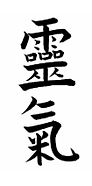
ReiKi

Reiki is both a word and a system.
The Japanese word Reiki is written using two kanji:
霊気 (reiki).
Rei (霊) can carry meanings associated with spirit, the spiritual or the mysterious.
Ki (気) is a much broader Japanese concept associated with energy, vitality, atmosphere or the quality or feeling of something. Related concepts are found in other Asian traditions, including qi in Chinese thought.
Together, reiki is commonly translated within Reiki practice as “spiritual energy” or “spiritually guided life-force energy.”
Today, however, the word Reiki is also used to describe the system of spiritual practice and healing associated with the Japanese teacher Mikao Usui (1865–1926).
Usui's system was not simply a collection of hand positions for giving treatments. It incorporated spiritual practice, meditation, personal development, healing practices and guiding principles for everyday life.
This is one of the things I particularly value about Reiki: it can be something we receive, something we practise and something that gradually influences the way we live.
Mikao Usui & the Reiki Precepts
Mikao Usui developed his system of practice in Japan in the early twentieth century. It became known as Usui Reiki Ryōhō — commonly translated as the Usui Reiki healing method or system.
Central to Usui's approach were simple principles for everyday life, commonly known today as the Five Reiki Precepts.
Different Reiki lineages translate the Japanese wording slightly differently, but they are generally expressed along these lines:
Just for today:
-
Do not anger
-
Do not worry
-
Be grateful
-
Be diligent or honest in your work and way of living
-
Be kind or compassionate to others
The exact English wording varies, but I think that is part of their beauty. They are not complicated instructions. They invite us to notice how we meet ordinary life — our worries, frustrations, gratitude, responsibilities and relationships with other people.
Alongside these precepts, Reiki practice developed to include meditation, hands-on healing practices, spiritual exercises and Reiju, a form of spiritual blessing or initiation used within Japanese Reiki practice.
Later Reiki traditions developed different teaching methods, symbols, attunements and treatment approaches as Reiki travelled beyond Japan.
For me, this history matters because Reiki is much more than lying on a treatment couch for an hour. Its principles can also become part of an ongoing practice of awareness, compassion and personal development.


Reiki, Chakras &
My Intuitive Practice
People often associate Reiki with the chakra system, but there is an interesting distinction between the original Japanese system of Reiki and the way Reiki later developed and is commonly practised in the West.
Did Mikao Usui Work with Chakras?
The Vedic chakra system did not form part of Mikao Usui's original Reiki method.
Chakras originate within Indian spiritual traditions and pre-date Reiki by many centuries. As Reiki developed and spread beyond Japan, however, different teachers and lineages incorporated additional ideas and practices. In modern Western Reiki, it is now common for practitioners to learn about the chakra system and ways of working with it alongside Reiki.
My own professional Reiki training and certification encompassed both traditional Usui Reiki and Western Reiki approaches.
I therefore draw upon both traditions within my practice while recognising the distinction between them.
I think this distinction is important. Reiki has continued to develop since Usui's lifetime, and something being widely practised within modern Reiki does not necessarily mean that it formed part of Usui's original Japanese method.
How I Work with Chakras
Within the Western aspect of my Reiki training, I learned to work with the chakra system. Over time, however, my own approach has become increasingly intuitive.
I don't approach the chakras as a rigid checklist or assume that every client requires each energy centre to be treated in exactly the same way.
During a Reiki treatment, my attention may be drawn intuitively towards a particular area or chakra. I may spend longer there, return to it later in the treatment, or simply allow the Reiki to continue for as long as feels appropriate.
This means that my treatments can incorporate elements of both the traditional and Western approaches in which I am trained, while also allowing each treatment to remain responsive to the individual receiving it.
As with other intuitive aspects of my practice, I remain curious about what I experience without treating energetic or intuitive impressions as medical information or diagnosis.
Are Chakras Really Rainbow Coloured?
Most of us are familiar with the beautiful modern image of seven chakras arranged in rainbow order — red, orange, yellow, green, blue, indigo and violet. I was taught these familiar colour associations prior to my Western Reiki training. However, as I continued to explore the history of the chakra system, I discovered that the story is rather more interesting. Chakras have a long history within Indian spiritual traditions, but there has not always been one single, universal system of seven. Different traditions and texts have described different numbers of chakras and represented them in different ways. Older chakra traditions also contain a wealth of colour symbolism, but not the simple red-to-violet rainbow sequence that has become so familiar in the West. The modern rainbow arrangement developed much later as Eastern teachings encountered Western esoteric, spiritual and healing traditions during the nineteenth and twentieth centuries. I find this particularly interesting because it encourages me not to impose a predetermined colour upon what I experience intuitively during Reiki. If my attention is drawn to a chakra during a treatment, I remain receptive to whatever I experience rather than expecting, for example, the heart chakra always to present itself as green or the crown as violet. Sometimes my intuitive experience corresponds beautifully with the familiar Western chakra system. At other times it doesn't. For me, the chakra system is therefore a useful framework rather than a rigid set of rules. My professional training encompasses both traditional Usui and Western Reiki approaches, and my practice has gradually developed into a combination of that training, experience and intuition. I would rather remain curious about what presents itself than decide beforehand what I am supposed to find.

Research into Reiki
Reiki has increasingly attracted the interest of researchers, and a growing number of studies have explored its use in areas including relaxation, anxiety, pain, fatigue and quality of life.
For anyone who would like to explore the research for themselves,
I have included links below to a selection of published studies and reviews indexed by PubMed, the biomedical literature database maintained by the U.S. National Library of Medicine.
Research into Reiki continues to develop, and I encourage anyone with an interest in the scientific literature to read the studies themselves, including their methods, findings and limitations.
Explore the research:
-
Reiki and quality of life — 2025 systematic review and meta-analysis
-
Reiki and pain — meta-analysis of randomised controlled trials
-
Reiki for pain, anxiety and stress in cancer patients — randomised controlled study
-
Reiki and guided imagery for pain and fatigue in oncology patients
-
Distant Reiki for pain, anxiety and fatigue in oncology patients — pilot study